
[ German original ]
by Martha Heizer
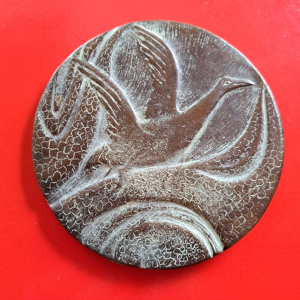
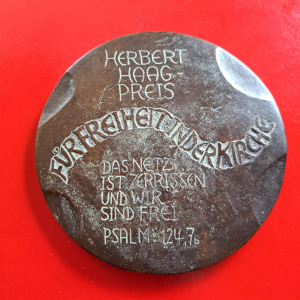
Since Wir sind Kirche was awarded the Herbert Haag Prize "For Freedom in the Church" in 1996, I have been at the award ceremony almost every year. It is always an event on a high intellectual and artistic level that leaves the participants gifted. Of course, it is also a social meeting place for many church reformers.
 |
 |
The award ceremony of the Herbert Haag Prize on 23 March 2026 not only brought many pleas for human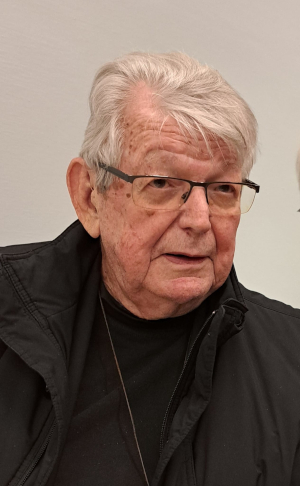 rights and democracy as well as for a church on the side of the poor and weak, but also standing ovations lasting several minutes for the award winner: Rita Perintfalvi from Budapest and Bishop Erwin Kräutler, who comes from Austria but was at home with the indigenous Amazonian peoples in Brazil for most of his life.
The 86-year-old Kräutler was honored for his life's work. In his words of thanks, Kräutler did not spare criticism of the church: He recalled that his diocese of Xingu in the Amazon region is huge and that many indigenous people live far away from churches, so that it is difficult to satisfy their longing for the Eucharist. "Why on earth is it not possible to ordain parishioners, men and women who live in these regions and some of whom already hold leadership functions, so that the Eucharist can be celebrated everywhere?" asked Kräutler.
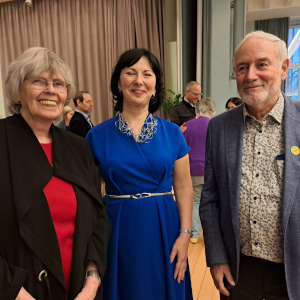
There were also clear words in a completely different context from Rita Perintfalvi, who is known for her commitment against the ideological instrumentalization of Christianity in Hungary. Laudator Irmgard Fischer emphasized that the theologian Perintfalvi had already warned against the social shift to the right and its entanglements with traditionalist Catholicism long before a corresponding awareness had even grown in the Western churches and also in the Western political world. And she added: "Anyone who reads or listens to her publications cannot later claim: We didn't know anything about all this!"
Perintfalvi herself also found strong words in her words of thanks: "What is happening in Hungary is only a symptom of the disease that has infected our whole world. Democracy, human rights thinking and the whole of Western civilization, at the center of which is the message of God incarnate, the Master's teaching on charity, are in danger." Perintfalvi also strongly criticized the Hungarian churches and spoke of a "collaboration of the churches with a neo-fascist dictatorship" that claims to be Christian. She added: "Respect for the few exceptions who tried to resist but were put down, pushed aside and punished for it!"
Her speech, in which she also reported very personally about the violence she herself had experienced and still experiences from right-wing radical groups at home and abroad, and during which she herself had to struggle again and again to keep her composure, moved not only me to tears.
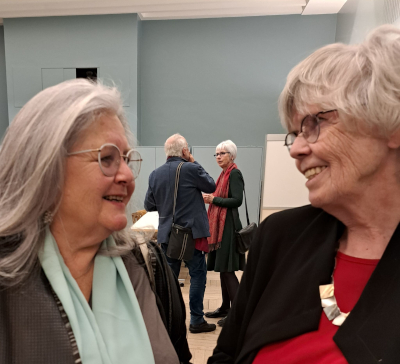
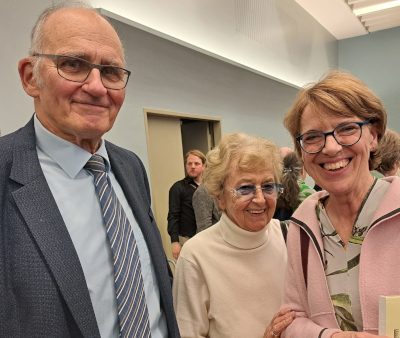
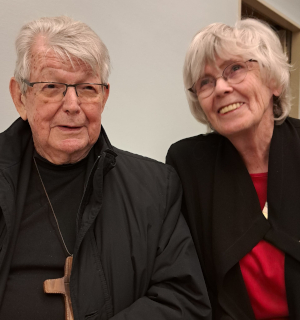
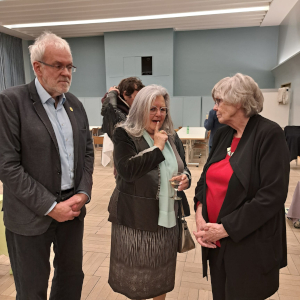
Thank God, the foundation always offers an aperitif riche at the end, i.e. a friendly get-together for good conversations with rolls and wine, so that it could be felt that despite everything, there can and must be something like "the lightness of being".
 |
 |
 |
 |
Preis „Für die Freiheit in der Kirche“
Martha Heizer
Seit Wir sind Kirche 1996 den Herbert-Haag-Preis „Für die Freiheit in der Kirche“ verliehen bekommen hatte, war ich fast jedes Jahr bei der Preisverleihung dabei. Es ist immer ein Ereignis auf hohem intellektuellem und künstlerischem Niveau, das die Teilnehmenden beschenkt zurücklässt. Natürlich ist es auch ein gesellschaftlicher Treffpunkt für viele Kirchenreformer*innen.
Die Preisverleihung des Herbert-Haag-Preises am 23. März 2026 brachte nicht nur vielfache Plädoyers für Menschenrechte und Demokratie sowie für eine Kirche an der Seite der Armen und Schwachen, sondern auch minutenlange Standing Ovations für die Preisträgerin und den Preisträger: Rita Perintfalvi aus Budapest und Bischof Erwin Kräutler, der aus Österreich stammt, aber für die längste Zeit seines Lebens in Brasilien bei den indigenen Amazonas-Völkern daheim war.
Der 86jährige Kräutler wurde für sein Lebenswerk geehrt. In seinen Dankesworten sparte Kräutler auch Kirchenkritisches nicht aus: Er erinnerte daran, dass seine Diözese Xingu im Amazonasgebiet riesig sei und viele Indigene weit weg von Kirchen leben würden, sodass es schwierig sei, ihre Sehnsucht nach der Eucharistie zu stillen. "Warum um Gottes willen ist es deshalb nicht möglich, Gemeindemitglieder, Männer und Frauen, die in diesen Regionen leben und teils schon Leitungsfunktionen innehaben, zu weihen, damit überall Eucharistie gefeiert werden kann?" fragte Kräutler.
Klare Worte in ganz anderem Kontext gab es auch von Rita Perintfalvi, die für ihren Einsatz gegen die ideologische Instrumentalisierung des Christentums in Ungarn bekannt ist. Laudatorin Irmgard Fischer betonte, dass die Theologin Perintfalvi vor dem gesellschaftlichen Rechtsruck und seinen Verflechtungen mit der traditionalistischen Katholizität schon gewarnt habe, lange bevor in den westlichen Kirchen und auch in der westlichen politischen Welt überhaupt erst ein entsprechendes Bewusstsein gewachsen sei. Und sie fügte hinzu: "Wer ihre Publikationen liest oder hört, kann später einmal nicht behaupten: Wir haben von all dem nichts gewusst!"
Starke Worte fand auch Perintfalvi selbst in ihren Dankesworten: "Was in Ungarn geschieht, ist nur ein Symptom für die Krankheit, die unsere ganze Welt angesteckt hat. Die Demokratie, das Menschenrechtsdenken und die gesamte westliche Zivilisation, in deren Zentrum die Botschaft des menschgewordenen Gottes, die Lehre des Meisters über die Nächstenliebe steht, befinden sich in Gefahr." Dabei übte Perintfalvi auch heftige Kritik an den ungarischen Kirchen und sprach von einer "Kollaboration der Kirchen mit einer neofaschistischen Diktatur", die für sich beanspruche, christlich zu sein. Sie ergänzte: "Respekt vor den wenigen Ausnahmen, die versucht haben, Widerstand zu leisten, dafür aber niedergemacht, beiseitegeschoben und bestraft wurden!"
Ihre Rede, in der sie auch sehr persönlich darüber berichtete, welche Gewalt sie selber von Seiten rechtsradikaler Gruppierungen aus dem In- und Ausland erfahren hatte und noch immer erfährt, und während der sie auch selbst immer wieder um Fassung ringen musste, hat nicht nur mich zu Tränen gerührt.
Gott sei Dank bietet die Stiftung als Abschluss immer einen Apero riche an, also freundschaftliches Beisammensein für gute Gespräche mit Brötchen und Wein, sodass spürbar werden konnte, dass es trotz allem auch so etwas wie „die Leichtigkeit des Seins“ geben kann und muss.