We Are Church Intl.

News and Media Releases

Latest News

May the choirs of angels come to greet you

Press Release

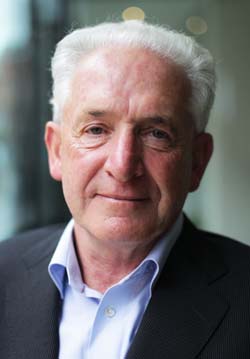
Bishop Pedro Casaldáliga (died 8 August 2020)

[ German ]  [ French ]

We are Church International celebrates the life of Dom Pedro Casaldáliga, who died on 8 August 2020 aged 92. He was a model disciple of Jesus and his Gospel. Born and ordained in Spain he lived since 1968 in Brazil, where he was appointed bishop of São Félix do Araguaia in 1971.

He was a prophetic bishop and last survivor of that extraordinary generation of "holy fathers of the Latin American Church" with a total commitment to the option for the poor. Animated by a firm Christian faith and a deep spirituality of liberation, Dom Pedro dedicated his life to social justice, the struggle against oppression and violence, environmental protection and a new world order based on solidarity. With simplicity and courage he fought for agrarian reform, defended the Indians of the Amazon, and stood by the Latin American peoples who were fighting for their liberation.

Aware of the need for an organized commitment of the Church alongside the poor, he was one of the founders of the Pastoral Commission for the Land (CPT) and the Indigenous Missionary Council (CIMI). For this reason he suffered persecution, was constantly threatened with death and saw his collaborators killed. He was also often criticized by the Vatican for his requests to "reform the Catholic Church in its structures of power, ministry and doctrinal formulation." He publicly supported the International Movement We Are Church in 1998 and Council 50 in 2015. With the freedom of the mystic and the poet, he knew how to combine the desire for a more free and just society with the hope for an inclusive and synodal Church.

#######

We Are Church International (WAC) founded in Rome in 1996, is a global coalition of national church reform groups. It is committed to the renewal of the Roman Catholic Church based on the Second Vatican Council (1962-1965) and the theological spirit developed from it.

Colm Holmes
Chair, We Are Church International
E This email address is being protected from spambots. You need JavaScript enabled to view it.
M +353 86 606 3636

Vatican is living in a patriarchal bubble

Press Release

25 July 2020. The new instruction issued on 20 July 2020 by the Congregation of the Clergy confirms the Vatican is living in a patriarchal bubble. It is an attempt to reassert clerical male authority and lay (especially female) subordination. 

Most disappointing is that Pope Francis appears to want to have it both ways. He has time and again spoken about the need to remove the evil of clericalism from our church. Yet he has approved this new instruction, which seeks to reinforce a rigid clericalism from the last century. After 7 years in office when will the real Pope Francis stand up? Maybe he would abolish the Congregation of the Clergy whose main role seems to be to promote clericalism?

Read more: Vatican is living in a patriarchal bubble

Lockdown: the Holy Saturday experience

by Thomas O’Loughlin

This year millions of us are locked in our homes. We are not going out to work, not going out to play, going nowhere to socialise. It is – so long as we are virus free and not one of those who have to try and tackle it or have to stay at their posts to keep the basics running – a bit like a big blank space. A shapeless empty time between BF (‘Before the Virus’) a few weeks ago (aka ‘normality’) and AF (‘After the Virus’) which will begin … when? … soon? … when normality, we hope, returns.

This year we can use that sense of a ‘blank time between’ to appreciate a part of the Christian year we usually skip. The Saturday between Good Friday and Easter Sunday. Holy Saturday is the great blank space in the liturgical year! Nothing seems to be happening: there are no special ceremonies, the Eucharist is never celebrated, and it is not even brought to the sick except as viaticum. In monastic communities the Liturgy of the Hours continues, but even here there is a sense of continuing the thoughts of Friday or a sense of simply waiting for the vigil that will herald in Easter. Most of the actual liturgical activity that does take place in communities is severely practical in nature: cleaning, polishing, preparing a fire, practicing ceremonies, arranging this and that – and complaining by the sacristan that some new idea just will not work because this is not how it is always done! But this gap in the liturgy has another value as a recollection of some aspects of our liturgy that are otherwise completely forgotten.

Read more: Lockdown: the Holy Saturday experience

Celebrating Good Friday locked down at Home

by Thomas O’Loughlin

Christianity – because of its use of the image of the cross – is often presented as a cult of death. Many Christians have collaborated in this presenting discipleship in terms of gloom, and prompting the wry comment from Nietzsche: ‘you Christians do not look redeemed!’ Here lies the great difference between, on one hand, what the liturgy of Good Friday wants us to experience anew, and, on the other, popular sentiment. Christianity is the religion of victory over suffering, sin, and death. This is why we call it good Friday.

While Mk 15:33-41 (followed by Mt and Lk) presents the passion as taking place in darkness (seeking to echo Amos 8:9), John – the gospel always read in the liturgy today – presents the events taking place in broad daylight: the mystery of the death of Jesus is a revelation, that which was hidden is now made clear so ‘that [we] may come to believe that Jesus is the Messiah, the Son of God, and that through believing [we] may have life in his name’ (Jn 20:31).

Read more: Celebrating Good Friday locked down at Home

Holy Thursday Homily